

The right commercial fuel partner is the one that can show you, in writing, when the truck arrives, what happens if it does not, how every gallon is documented and which terms can change after you sign. Price matters, but it is the easiest thing to compare and the least likely to tell you whether your equipment keeps running. This guide gives facilities managers, fleet managers, superintendents and procurement teams a practical way to evaluate a vendor, onboard it and test whether it can cover every site you run.
TL;DR
- Compare vendors on commitments, not just cents per gallon: delivery windows, what happens when one is missed, and which terms can change on notice.
- Ask for the delivery ticket with every invoice, and confirm whether billing is on net or gross gallons.
- For dyed diesel, bulk tanks and government work, confirm the vendor’s record keeping and tax handling before the first load.
- For backup generators, check truck count, site access and outage-day capacity, not only how much fuel can be stored.
- For multi-state work, onboard once, with one point of contact, and test the vendor on your most remote site first.
Table of Contents
- Start with what the quote leaves out
- Delivery reliability: get the commitment in hours
- Safety, fuel quality and compliance
- Records, tickets and invoices
- Selecting a generator refueling vendor
- Can the partner cover every site?
- A scorecard you can use
- Onboarding a fuel vendor, step by step
- Match the vendor to your industry
- How Anytime Fuel Pros fits
- FAQ
- Sources
Start with what the quote leaves out
A per-gallon price is a snapshot. The contract around it decides what you pay over twelve months. Before you compare vendors, ask each one which terms it can change on notice. The list is short but expensive when ignored:
- The price formula. Is it a posted rack price plus a fixed margin, a daily market quote, or a fixed rate for a period? What index is used, and on what day is it read?
- Fees. Delivery fees, fuel surcharges, small-drop fees, after-hours fees and tank rental fees should all be listed before you sign, not discovered on the first invoice.
- Delivery minimums. A minimum drop size that does not match your tank size can push you into over-ordering or paying a short-load charge.
- Payment terms. Net days, credit limits and what happens to supply if a payment is disputed.
- Supply commitment. Does the vendor promise to supply you in a shortage, or only “when available”?
- Exit terms. How much notice does each side owe, and can you leave without penalty?
These questions come up repeatedly in guidance on choosing a bulk fuel supplier beyond price, and they are the right place to begin because they cost nothing to ask. A vendor that answers them plainly is already telling you something about how the account will be run.
The brand-neutral way to frame it: the hidden cost of a fuel contract is rarely the fuel. It is the idle crew, the missed pour, the generator that was supposed to be topped off. Price the risk, not just the product.
Delivery reliability: get the commitment in hours
Every vendor says it is reliable. Turn that word into something you can hold them to. Ask three things:
- What delivery window do you commit to? A real answer is in hours, such as a morning or afternoon window for scheduled drops, and a response target for emergencies.
- What happens when you miss it? Look for a consequence: a credit, priority on the next load, or an escalation path.
- How will I know a truck is late? A call, a text or a portal update. You should hear it from the vendor before you discover it on site.
These are the same three tests described in supplier selection guidance, and they work for any industry. A vendor that cannot name a window, a consequence and a notification channel is selling an intention, not a service level.
If you are writing these into an RFP, our guide to fuel delivery service levels for procurement teams lays out what to define and how to word it.
Scheduled versus on-demand versus emergency
Vendors often handle these three differently, so ask about each separately:
- Scheduled recurring deliveries should run on a calendar tied to your consumption, not on your phone calls. See how this works in practice in our piece on bulk fuel tank fill scheduling.
- On-demand orders need a clear cutoff time for same-day or next-day drops.
- Emergency and after-hours response needs a stated response target, a 24/7 number that is answered by a person and a defined coverage area. At Anytime Fuel Pros, we offer 24/7 service and target a 3-hour emergency response in covered areas.
If your operation cannot tolerate a gap, build the emergency terms into the contract rather than hoping for goodwill. Our emergency fuel plan guide walks through what a procurement-ready plan includes.
Safety, fuel quality and compliance
A fuel vendor is a hazardous materials carrier and a regulated seller. You do not need to become a regulatory expert, but you should know what to ask.
Dyed diesel and tax handling
Off-road equipment typically runs on dyed (red) diesel, and on-road vehicles on clear diesel. Under federal rules, tax is not imposed on certain diesel removals when the fuel meets the dyeing and marking requirements, the person otherwise liable is a registered taxable fuel registrant and the terminal is approved. The details, including the required dye concentration, are in 26 CFR 48.4082-1.
What this means for your vendor review:
- Ask how the vendor keeps dyed and clear diesel separate on its trucks and in its records.
- Ask whether your account will carry clear documentation of which fuel went into which tank, so your own tax and audit work is straightforward.
- If you run mixed fleets, confirm that on-road and off-road fuel are invoiced as separate lines.
For public agencies and government contracts, this paperwork is often the reason a vendor is chosen or dropped. Ask for it up front.
Transport and equipment rules
Federal hazardous materials rules for fuel transportation were amended with an effective date of February 13, 2026. The changes include electronic submission of cargo tank facility registration and revised marking requirements for multiple petroleum distillate fuels, as set out in the Federal Register notice. You do not have to track these yourself. Simply ask a prospective vendor to confirm that its trucks and registrations are current and who handles spill response if something goes wrong. Our overview of mobile fuel delivery safety and the diesel spill response actions page show what a sound procedure looks like.
Fuel quality
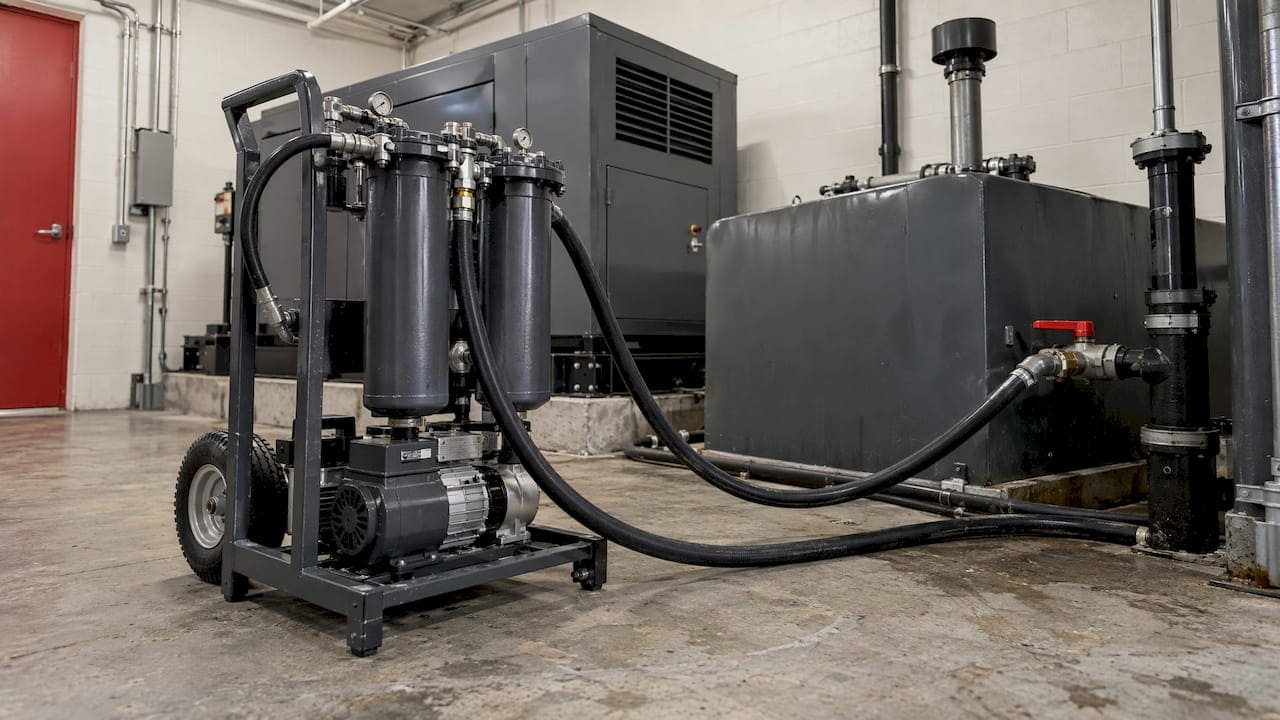
Ask where the vendor sources fuel, how it handles contamination and whether it can support long-stored fuel. Standing generator tanks are the classic case: fuel that sits for months needs attention. A vendor that offers fuel polishing and a maintenance program is thinking about the same problem you are. See our generator fuel maintenance program for the approach we take.
Records, tickets and invoices
The paperwork is where a vendor relationship is won or lost, because it is what your accounts payable team and your auditors see.
A vendor should provide a delivery ticket with each invoice. The ticket records when fuel changed hands, and the invoice should be built from it. Also confirm whether you are billed on net or gross gallons, since temperature changes volume and the difference adds up on large drops. Both points are covered in this supplier checklist.
In Texas, the rules reinforce why this matters. Merchants, wholesalers, distributors and suppliers must keep invoices, receipts and motor-fuel purchase, sale, delivery or distribution records, plus related sampling and testing documents, for four years, and merchants must keep delivery tickets and automotive fuel-rating records for one year, according to the Texas Department of Licensing and Regulation compliance guide. A vendor serving Texas should be able to tell you, without hesitation, how its record retention works.
What to ask for:
- A signed or electronically confirmed ticket for every delivery, showing date, time, product, quantity and location.
- Itemized invoices that separate fuel, taxes, fees and any tank rental.
- Access to past tickets and invoices on request, not only on the day of the order.
- A consistent invoice format that matches your AP system. Our guide to matching signed tickets to AP records shows the fields that make reconciliation fast.
We provide itemized invoicing and delivery confirmation as part of our service, so there is a clear trail from the truck to the payment.
Selecting a generator refueling vendor
Backup generator fueling is a different job from filling a fleet. The fuel must arrive when the grid does not, usually in bad weather, often with roads in poor condition. In a July 2025 article in Data Center Frontier, Andrew Holmberg argues that resiliency has to be engineered, not assumed, and that it is measured in flow, meaning how consistently and quickly fuel can reach the generator, as well as in storage capacity.
His advice for operators translates into a selection checklist:
- Model consumption on real load. Calculate burn rate from the loads you actually expect, not the nameplate figure.
- Count the trucks. How many trucks, and of what type, will the vendor need to keep you running through a multi-day outage?
- Test access. Confirm that gates, fill points and delivery paths support continuous fueling, including at night.
- Plan for disruption. Weather, road closures and market disruptions should be in the plan, not a surprise.
Add the practical items on top: a named dispatcher, a priority list for critical customers during regional events, a standing test delivery before you need one and a clear process for confirming tank levels. Our resources on power outage fuel logistics and mission-critical uptime fueling go deeper, and the generator fuel delivery page describes what we offer for standby power.
Can the partner cover every site?
If you run more than one location, or more than one state, “nationwide” on a website needs translating into specifics. Ask:
- Who delivers at each site? Some vendors use their own trucks in primary markets and a partner network elsewhere. Neither is wrong, but you should know which applies where.
- Who is accountable? You want one contact, one contract, one invoice format, regardless of who drives the truck.
- How are standards enforced across the network? Delivery windows, ticketing and invoicing should look the same in Utah as in Texas.
- What about remote sites? Mines, frac pads and rural construction sites test a vendor’s logistics more than a city yard does. Ask for a recent example of a hard-to-reach site served.
- What happens in a regional emergency? Hurricanes, wildfires and outages stress every supplier at once. Ask how priority is set.
Anytime Fuel Pros operates directly in San Antonio, Austin, Dallas-Fort Worth and Salt Lake City, and extends coverage across the continental United States through a national partner network, with a single point of contact for multi-site and multi-state needs.
The logistics point extends beyond fuel. Fleets that depend on diesel power also depend on parts and equipment staying available, as this look at diesel engine availability in logistics explains. Fuel supply is one link in the same uptime chain.
A scorecard you can use
Use a simple weighted comparison when you have two or three finalists. Adjust the weights to your operation.
| Criterion | What to look for | Suggested weight |
|---|---|---|
| Delivery commitment | Window in hours, consequence for a miss, late-truck notification | 25% |
| Emergency response | 24/7 live dispatch, stated response target, coverage area | 20% |
| Contract terms | Price formula, fees, minimums, payment terms, exit notice | 15% |
| Documentation | Ticket with every invoice, itemized billing, net or gross gallons | 15% |
| Compliance | Dyed and clear diesel handling, record retention, current transport registrations | 10% |
| Coverage | Own trucks versus network, remote-site experience, single contact | 10% |
| Technology | Order, dispatch and delivery confirmation visibility | 5% |
Score each vendor from one to five on each line, multiply by the weight and total. The number matters less than the conversation it forces: any criterion where a vendor cannot give a concrete answer is a risk you can now price.
Onboarding a fuel vendor, step by step
Once you have chosen, a clean onboarding prevents most early problems. Whether you are setting up one yard or a dozen sites, the sequence is similar.
- Gather site data. For each location: address, GPS or gate instructions, tank type and capacity, fill-point location, product (dyed diesel, clear diesel, gasoline, DEF), and the typical consumption rate.
- Assign contacts. Name a primary and backup contact at each site, with phone numbers that are answered after hours, plus an accounts payable contact.
- Set safety and access rules. Share site orientation requirements, PPE, spill kit locations, gate codes and any permit or customer-specific rules.
- Agree on the schedule. Choose recurring delivery days for predictable sites, trigger levels for on-demand sites and an emergency escalation path.
- Define the paperwork. Agree on ticket format, invoice fields, PO numbers, cost-center coding and how tax-exempt or dyed fuel is documented.
- Run a pilot delivery. Start with one site, review the ticket and invoice against your records, then roll out to the rest.
- Review after 30 and 90 days. Compare actual delivery times to the committed windows and fix gaps early.
Our on-site diesel delivery setup guide covers the physical side, including access and tank considerations, and the page on how on-site diesel delivery works explains what a typical delivery looks like from order to ticket.
Match the vendor to your industry
The same checklist applies everywhere, but the weight shifts:
- Data centers and hospitals: emergency response, truck capacity and access testing come first.
- Construction and excavation: reliable morning windows, wet hosing for equipment fleets and job site tank management.
- Mining and oil and gas: remote-site experience and bulk volume. See our notes on frac site diesel logistics.
- Municipal and government: documentation, compliant dyed diesel handling and contract structure.
- Events and film: short-term generator fueling, flexible timing and overnight support.
- Trucking and logistics: yard fueling, wet hosing and reefer fleet fueling on a schedule that matches dispatch.
How Anytime Fuel Pros fits
We deliver diesel (dyed and clear), gasoline and DEF to job sites, fleets, equipment yards, generators and event venues, with bulk tank fills, fuel tank rentals, wet hosing, mobile fleet fueling, reefer fleet fueling, emergency response and fuel polishing. Our approach is built around the criteria in this guide: 24/7 service, a 3-hour emergency response target in covered areas, itemized invoicing and technology-driven order and dispatch coordination.
If you are building a shortlist, see our full list of fuel services or go straight to bulk fuel delivery. When you are ready to set up an account or place an order, you can order now and our team will help you plan onboarding for one site or many.
FAQ
What is the most important factor when choosing a fuel partner?
Reliability you can verify. Ask for a delivery window in hours, a consequence if it is missed and a defined way to be notified of a late truck. Price is secondary to whether the fuel arrives when your equipment needs it.
What should I ask about contract terms?
Ask which terms can change on notice: price formula, fees, delivery minimums, payment terms and supply commitment. Also ask how much notice is required and whether you can exit without penalty.
What documents should a fuel vendor provide?
A delivery ticket with every invoice, itemized invoices and clarity on whether billing is on net or gross gallons. In Texas, suppliers and merchants have defined record retention periods, so ask how long the vendor keeps tickets and invoices.
How do I choose a generator refueling vendor?
Model your fuel burn on real load, ask how many trucks the vendor can commit in an outage, confirm that your fill points and access routes work for continuous fueling and plan for weather and road closures. A pilot delivery before you need one is a good habit.
How do I onboard a vendor for multiple sites?
Collect site and tank data, name contacts, agree on safety and access rules, set a delivery schedule and paperwork format, then pilot at one site before rolling out. Review performance after 30 and 90 days.
Sources
- Choosing a Bulk Fuel Supplier Beyond Price
- Fuel Resiliency Demands More Than Just a Fuel Supplier, Data Center Frontier
- Compliance Guide for Motor Fuel Metering and Quality, Texas Department of Licensing and Regulation
- 26 CFR 48.4082-1, Diesel fuel and kerosene, eCFR
- Hazardous Materials: Eliminating Unnecessary Regulatory Burdens on Fuel Transportation, Federal Register
Recent Comments