
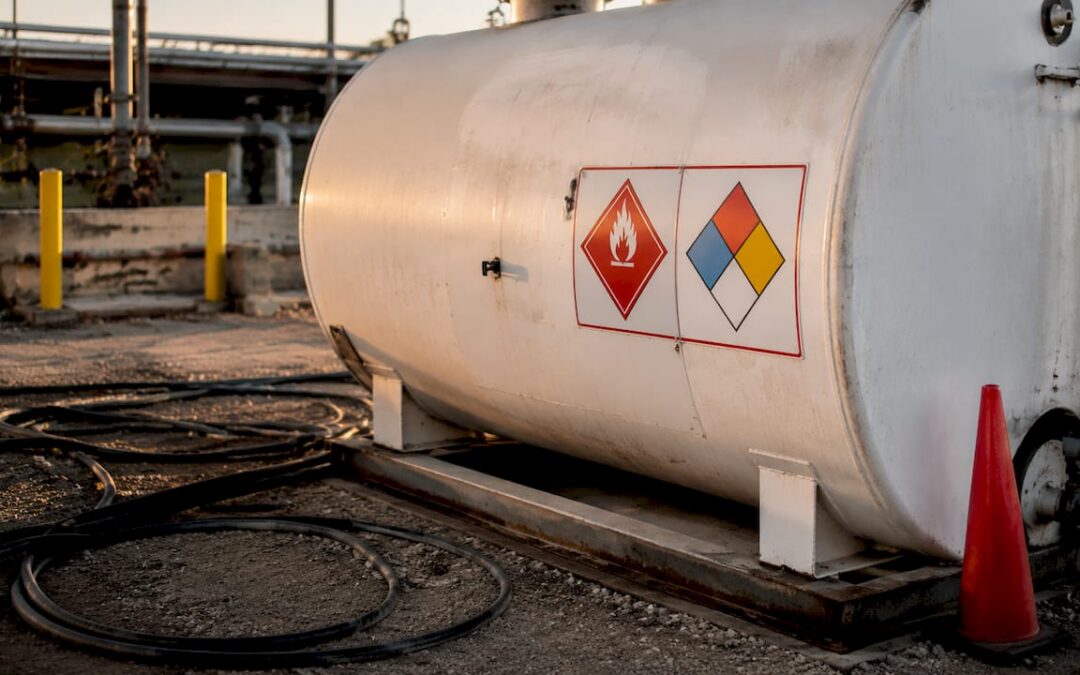
Off-road diesel compliance requires strict adherence to labeling, usage restrictions, and record-keeping to prevent costly tax penalties and regulatory violations. The industry term for this fuel is “dyed diesel,” a red-dyed fuel sold tax-exempt under IRS rules for non-highway equipment such as excavators, generators, agricultural machinery, and mining vehicles. Federal oversight falls primarily under the IRS and EPA, with state-level enforcement from agencies like the California Air Resources Board (CARB). Off-road diesel compliance requirements examples span everything from tank labeling language to DEF sensor maintenance, and the consequences of getting it wrong are severe. The base penalty for dyed diesel misuse is the greater of $1,000 or $10 per gallon of misused fuel, plus all unpaid excise taxes. That penalty structure makes compliance a financial priority, not just a regulatory formality.
1. What are the key off-road diesel compliance requirements for labeling?
Labeling is the first line of defense in any dyed diesel compliance program. Storage tanks, fill caps, containment boxes, and pumps must carry specific warning language to prevent taxable use and protect your operation during an audit. The required phrase is: “Dyed Diesel, Non Taxable Use Only, Penalty for Taxable Use.” This language must appear on every point of contact with the fuel, not just the main storage tank.
Labeling failures are among the most common audit triggers compliance officers face. An inspector who finds an unlabeled pump or a fill cap without the required warning can treat the entire tank’s contents as taxable fuel. That presumption shifts the burden of proof to you, and recovering from it requires complete withdrawal records.
- Storage tanks: Label must appear on the tank body, visible from the fill point.
- Fill caps and spill containment boxes: Each cap and box requires its own compliant label.
- Dispensing pumps and hoses: Labels must be affixed directly to the dispensing equipment, not just nearby signage.
- Mobile fuel units: Any portable tank or fuel trailer used for off-road equipment fueling requires the same labeling as fixed storage.
Pro Tip: Photograph every labeled component quarterly and store the images in your compliance file. Dated photos provide immediate visual evidence during an IRS or state inspection.
Labeling also supports your tax exemption claim. The dye in off-road diesel is the physical proof that excise tax was not collected at the point of sale. Proper labels reinforce that proof at every point downstream. A site where labels are missing or faded signals to inspectors that fuel management is loose, which invites deeper scrutiny.

2. How should companies maintain records to meet diesel compliance regulations?
Record-keeping is the backbone of any defensible compliance program. Federal rules require fuel use records to be maintained for at least three years, and several states require longer retention periods or additional filings. The records that matter most are purchase invoices, delivery receipts, monthly inventory logs, and fuel withdrawal documentation linked directly to specific equipment.
The link between fuel and equipment is critical. A delivery receipt that shows 500 gallons of dyed diesel arrived on a given date is not enough on its own. You need a corresponding equipment fuel log showing which excavator, generator, or loader consumed those gallons and when. Without that link, an auditor has no way to verify the fuel stayed off-road.
- Purchase invoices: Retain every invoice from your fuel supplier, including the supplier’s name, delivery date, volume, and fuel type.
- Delivery receipts: Keep signed delivery receipts that confirm dyed diesel was received, not clear taxable diesel.
- Monthly inventory logs: Record beginning inventory, deliveries received, and total withdrawals each month.
- Equipment fuel logs: Log each fueling event by equipment ID, operator, date, and gallons dispensed.
- Cross-reference audits: Reconcile monthly inventory against equipment logs to catch discrepancies before an inspector does.
Pro Tip: Build a digital record system that links each fuel delivery to specific equipment IDs and usage dates. Experienced compliance officers use this approach to cut IRS and state audit response time significantly.
Common pitfalls include using a single log for both dyed and clear diesel, failing to record partial fills, and letting paper logs accumulate without digital backup. Businesses that mix taxed and untaxed diesel records face a presumption of misuse and tax liability on all fuel in mis-marked tanks unless detailed records prove otherwise. That presumption is difficult and expensive to overcome after the fact.
3. What operational measures prevent off-road diesel misuse?
Operational controls are what separate compliant operations from those that rely on luck. The single most effective measure is physical separation of dyed and clear diesel storage and dispensing systems. Cross-contamination from shared pumps or hoses between taxed and dyed diesel creates audit red flags and direct compliance risk. Best practice is dedicated, clearly labeled dispensing equipment for each fuel type.
Operational controls that compliance officers should implement include:
- Separate storage tanks: Never store dyed and clear diesel in the same tank or connected tank system.
- Dedicated dispensing equipment: Use separate pumps, hoses, and nozzles for each fuel type. Color-code them if possible.
- Access controls: Restrict dyed diesel dispensing points to off-road equipment operators only. Keyed or card-access pumps prevent unauthorized use.
- Driver and operator training: Train every operator on which fuel goes in which equipment. A single fueling error by an untrained worker can trigger a compliance event.
- On-site delivery protocols: Require fuel delivery drivers to confirm fuel type and destination tank before dispensing. A signed delivery confirmation adds another layer of documentation.
The table below shows how operational control levels compare across common site configurations:
| Control category | Basic site setup | Compliant site setup |
|---|---|---|
| Storage separation | Shared tank with labels | Dedicated tanks per fuel type |
| Dispensing equipment | Shared pump, manual log | Separate pumps, digital log |
| Access control | Open access | Keyed or card-access pump |
| Operator training | Informal, verbal | Documented, signed training records |
| Delivery confirmation | Verbal only | Signed receipt with fuel type noted |
On-site fuel delivery services reduce misuse risk by removing the human variable from the fueling chain. When a professional delivery team brings dyed diesel directly to your equipment yard with documented delivery receipts, the chain of custody is clear from the supplier to the tank. That clarity is exactly what auditors look for.
4. How do 2026 regulatory updates affect off-road diesel compliance?
Compliance officers in 2026 are managing a more layered regulatory environment than at any point in the past decade. Federal IRS excise tax rules remain the foundation, but state-level environmental mandates from agencies like CARB have added significant complexity for operations running diesel equipment across state lines.
Key 2026 developments compliance officers must track:
- EPA DEF sensor guidance: New EPA guidance allows mild engine derate periods before severe speed reduction when DEF sensor failures occur, and clarifies right-to-repair rules for sensor software updates. This reduces unnecessary downtime but does not eliminate the emissions compliance obligation.
- California HD I/M regulations: California’s heavy-duty inspection and maintenance program requires diesel vehicle owners, including out-of-state operators, to obtain valid compliance certificates and submit emissions test results to CARB. Roadside inspections enforce these requirements actively.
- IRS enforcement authority: IRS agents can inspect fuel sites, examine books, sample fuel, and detain containers suspected of carrying taxable fuel under 26 U.S.C. § 4083(d). Roadside inspections are increasing, not decreasing.
- Documentation scrutiny: Inspectors are paying closer attention to the link between delivery records and equipment logs. Gaps in that chain are treated as evidence of misuse.
“Compliance officers must juggle federal IRS excise tax rules and increasingly complex state-level environmental mandates in 2026, creating layered compliance environments.” — Federal Register analysis, february 2026
The EPA’s shift on DEF sensor software updates reflects a broader regulatory trend: agencies are trying to balance emissions control with operational practicality. That balance does not reduce your compliance obligations. It means the rules are more nuanced, and the cost of misreading them is higher. Understanding off-road diesel laws now requires tracking both federal tax rules and state emissions programs simultaneously.
For operations in Texas, Utah, or California, the practical implication is that a single compliance failure can trigger both IRS tax penalties and state environmental fines. The dyed diesel compliance guide published by Anytimefuelpros covers the intersection of these requirements in detail for operations managers who need a working reference.
Compliance officers running multi-state operations should also review the 2026 off-road diesel procurement guide for updated sourcing and documentation requirements that reflect current federal and state enforcement priorities.
Key takeaways
Off-road diesel compliance requires documented separation of dyed and taxable fuel through labeling, records, and operational controls to avoid IRS penalties and state enforcement actions.
| Point | Details |
|---|---|
| Labeling is mandatory at every contact point | Tanks, caps, pumps, and mobile units must all carry the required dyed diesel warning phrase. |
| Records must link fuel to equipment | Purchase invoices, delivery receipts, and equipment logs must connect to prove off-road use. |
| Physical separation prevents misuse | Dedicated tanks and pumps for dyed diesel eliminate cross-contamination and audit risk. |
| 2026 adds state-level complexity | California HD I/M and EPA DEF guidance create layered obligations beyond federal IRS rules. |
| Penalties are steep and presumptive | Misuse triggers the greater of $1,000 or $10 per gallon, plus unpaid excise taxes. |
Anytimefuelpros delivers compliance-ready off-road diesel
Compliance failures often start with fuel delivery, not paperwork. When documentation is incomplete or fuel arrives without proper labeling confirmation, the entire compliance chain breaks down.

Anytimefuelpros delivers on-site dyed diesel with signed delivery receipts, fuel type confirmation, and documentation designed to support IRS and state audit readiness. For operations needing bulk storage solutions with compliant tank labeling and separation protocols, Anytimefuelpros builds the delivery program around your site’s specific compliance requirements. Serving construction, mining, municipal, and data center operations across Texas, Utah, and nationwide, Anytimefuelpros gives compliance officers a fuel partner who understands what auditors look for.
FAQ
What is dyed diesel and why does it matter for compliance?
Dyed diesel is red-dyed fuel sold tax-exempt for off-road, non-highway equipment use under IRS rules. Using it in highway vehicles is a federal tax violation with penalties starting at $1,000 or $10 per gallon, whichever is greater.
What records do I need to keep for off-road diesel compliance?
Federal rules require at least three years of records including purchase invoices, delivery receipts, monthly inventory logs, and equipment fuel logs that link each fueling event to a specific piece of off-road equipment.
What labeling is required on dyed diesel storage tanks?
Tanks, fill caps, spill containment boxes, and dispensing pumps must all display the phrase “Dyed Diesel, Non Taxable Use Only, Penalty for Taxable Use” as required by IRS and state motor fuels tax rules.
How does California’s HD I/M regulation affect off-road diesel operators?
California’s heavy-duty inspection and maintenance program requires diesel vehicle owners, including out-of-state operators, to obtain valid compliance certificates and submit emissions test results to CARB, with active roadside enforcement.
What happens if an IRS agent finds unlabeled dyed diesel equipment?
IRS agents have authority under 26 U.S.C. § 4083(d) to inspect sites, sample fuel, and detain containers. Unlabeled equipment triggers a presumption of misuse, shifting the burden of proof to the operator to demonstrate off-road use through complete withdrawal records.
Recent Comments