
Fuel delivery is defined as the transport and transfer of hazardous flammable materials under strict federal regulations, and why fuel delivery requires trained operators becomes clear the moment you consider what goes wrong without them. Improper operator training causes 79% of preventable material handling accidents. OSHA records 34,900 industrial truck-related injuries annually, with penalties exceeding $16,000 per violation. For facility managers, fleet coordinators, and procurement officers, those numbers translate directly into liability, downtime, and regulatory exposure. Trained operators are not a preference. They are the operational foundation that keeps fuel delivery safe, legal, and efficient.
Why fuel delivery requires trained operators: the regulatory framework
Federal law sets the floor for what qualifies as a trained fuel delivery operator. Drivers hauling placardable quantities of fuel must complete specialized Hazmat training under 49 CFR Part 172 Subpart H, plus cargo-tank vehicle training under 49 CFR 177.816. Both carry a mandatory 3-year retraining cycle. That cycle is not a formality. It reflects how quickly regulations, equipment standards, and hazard protocols evolve in fuel transport.
The combined Tank and Hazmat endorsement, often written as the “X” endorsement on a commercial driver’s license, requires written testing and a TSA security threat assessment. Incomplete compliance on either step delays onboarding and leaves your operation exposed during audits. Procurement officers evaluating fuel vendors should verify that every driver holds a current CDL with the appropriate Hazmat and Tanker endorsements before a single delivery is scheduled.
Propane handlers face an additional layer of certification. Bobtail Delivery courses cost $255–$375 and are required every three years, with a minimum 70% pass rate on the final certification exam. That cost is modest compared to the liability exposure of an uncertified driver managing a pressurized delivery vehicle. These courses cover vehicle inspection, emergency shutoff procedures, and customer site hazard assessment.
Key modules tested across Hazmat and cargo-tank training programs include:
- Emergency response procedures for spills, fires, and pressure releases
- Proper placarding and shipping paper requirements
- Pre-trip and post-trip vehicle inspection protocols
- Loading and unloading procedures specific to flammable liquids
- Communication requirements during transport incidents
Pro Tip: Request copies of HM-126F training records from any fuel vendor before signing a contract. Federal audits now stress not only driver ability but the rigor of training curriculum design and record-keeping practices. Missing documentation can void insurance coverage even when the operator is fully skilled.
How do trained operators prevent accidents during fuel delivery?
Fuel transfer is routinely underestimated as a risk event. Operators who treat it as routine are the ones who cause overfills, tip-overs, and cross-contamination incidents. Trained operators reduce accidents by executing isolation switching and hazard recognition subtasks that managers often overlook when designing broad-scope training programs. The subtask is frequently the whole task in fuel delivery.
Common risks that qualified fuel delivery personnel are trained to prevent include:
- Overfills: Operators monitor transfer rates and use automatic shutoff systems correctly, preventing tank overflow and ground contamination.
- Tip-overs: Proper positioning of tanker vehicles on uneven terrain, a skill taught in cargo-tank training, eliminates a leading cause of catastrophic spills.
- Cross-contamination: Verifying UN 1203 documentation before transfer confirms the correct fuel grade and prevents equipment damage or environmental incidents.
- Ignition hazards: Trained operators bond and ground equipment before transfer, eliminating static discharge risk near flammable vapors.
- Emergency escalation: Operators trained in isolation procedures can shut down a transfer and contain a developing incident before it becomes a reportable event.
“Training builds a safety culture where operators make better decisions and increase overall facility productivity.” The financial and human costs avoided through that culture are not abstract. Every prevented spill avoids cleanup costs, regulatory fines, equipment downtime, and potential injury claims.
A proactive safety culture built through training also changes how operators respond under pressure. An untrained driver who encounters an unexpected site condition, a blocked drain, a malfunctioning shutoff valve, or an unstable surface, defaults to improvisation. A trained operator defaults to protocol. That difference determines whether an incident becomes a near-miss or a recordable event.
The financial case is direct. OSHA penalties exceeding $16,000 per violation add up fast across a multi-site operation. A single fuel spill requiring environmental remediation can cost far more. Fuel delivery safety training pays for itself on the first incident it prevents.

What skills separate qualified fuel delivery personnel from the rest?
Qualification in fuel delivery is not just about holding the right license. It is about the operational knowledge that fills the gap between certification and execution. Skilled operators bring a specific set of competencies that untrained drivers simply do not have.
-
Equipment limitation awareness. Trained operators know the rated capacity, pressure tolerances, and mechanical limits of every component on their delivery vehicle. They do not guess. They verify before transfer begins.
-
Pre-transfer documentation checks. Verifying UN 1203 documentation before any gasoline transfer is a critical subtask that prevents environmental incidents and product liability claims. Untrained operators frequently skip this step.
-
Site-specific hazard assessment. Qualified personnel evaluate the delivery site before positioning the vehicle. They identify overhead obstructions, drainage proximity, pedestrian traffic, and surface stability. This assessment takes minutes and prevents hours of incident management.
-
Transfer monitoring and alert management. Trained operators do not walk away during a transfer. They monitor flow rates, watch for pressure anomalies, and respond to delivery alerts in real time. Passive monitoring is a failure mode, not a delivery practice.
-
Emergency response execution. When something goes wrong, trained operators follow a practiced sequence: stop transfer, isolate the source, notify dispatch, and contain the area. That sequence is the difference between a contained incident and a reportable spill.
Pro Tip: When evaluating fuel delivery vendors, ask specifically about their on-site delivery protocols and how operators handle non-standard site conditions. The answer reveals whether training is theoretical or operationally applied.
Decision-making under pressure is the skill that separates good operators from great ones. Fuel delivery environments change constantly. Weather shifts, site access changes, and equipment behaves unexpectedly. Operators who have trained on high-risk subtasks respond with judgment, not panic. That judgment protects your assets, your people, and your regulatory standing.
How trained operators improve compliance and operational efficiency
Safety is the headline benefit of qualified fuel delivery personnel. Compliance and operational efficiency are the compounding returns. The two are inseparable in fuel logistics.
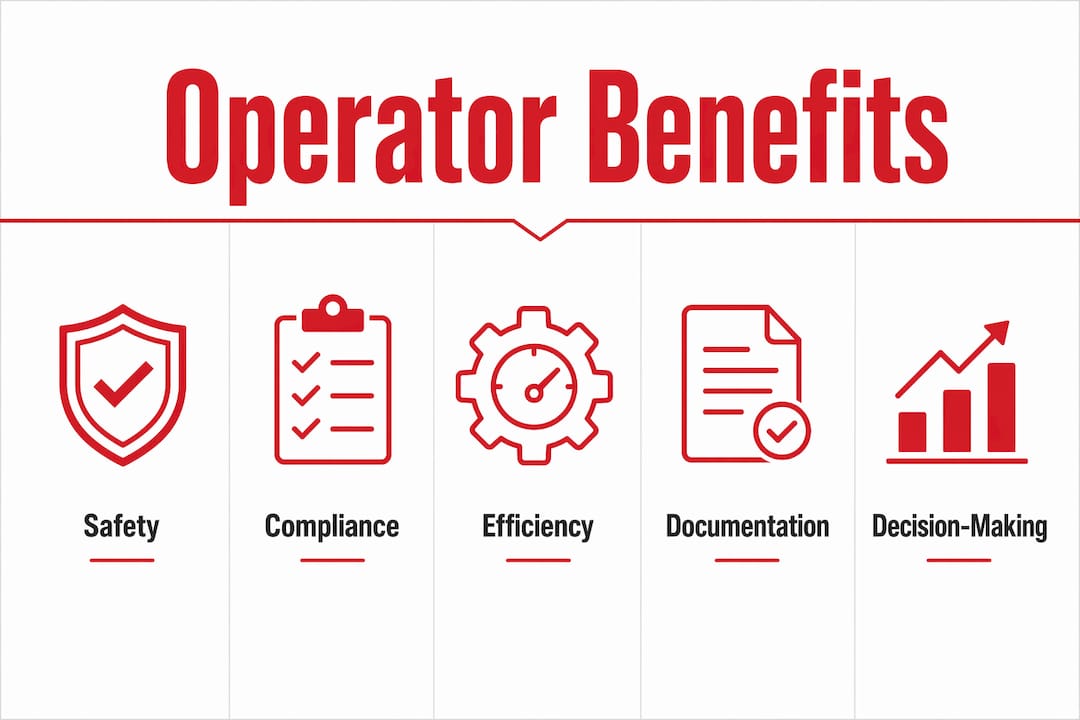
Disciplined documentation is where compliance lives or dies. HM-126F training records must be maintained on a strict 3-year cycle. Missing documents can void insurance coverage regardless of operator skill. For procurement officers managing multi-site fuel contracts, that is a material financial risk. Vendors who maintain clean, auditable training records protect your operation during FMCSA audits and insurance reviews.
Standardized programs like the NPGA’s ACE curriculum improve record-keeping quality and curriculum rigor, which federal auditors now examine directly. An operator trained under a validated program is not just safer. They are audit-ready.
The operational efficiency gains are equally concrete:
| Efficiency Factor | Impact of Trained Operators |
|---|---|
| Delivery accuracy | Correct fuel grade and volume confirmed before transfer, reducing costly errors |
| Downtime reduction | Protocol-driven transfers complete faster with fewer interruptions or restarts |
| Audit readiness | Clean HM-126F records reduce audit preparation time and legal exposure |
| Site throughput | Faster site assessment and setup means more deliveries completed per shift |
| Incident recovery | Trained response limits spill scope, cutting cleanup time and regulatory reporting burden |
Fleet coordinators managing fuel delivery for logistics yards see this efficiency gap most clearly. An untrained operator who causes a delivery error or a minor spill does not just create a safety problem. They create a scheduling problem, a documentation problem, and a vendor relationship problem simultaneously. Trained operators prevent that cascade before it starts.
The broader point is that training is not a cost center. It is a productivity multiplier. Operations that invest in qualified fuel delivery personnel spend less time managing incidents and more time running their core business.
Key Takeaways
Fuel delivery requires trained operators because the combination of federal regulations, high-stakes hazard management, and documentation discipline makes unqualified personnel a direct liability for any operation.
| Point | Details |
|---|---|
| Federal training is mandatory | Operators must hold CDL Tank and Hazmat endorsements under 49 CFR Part 172 and 49 CFR 177.816, renewed every three years. |
| Documentation protects coverage | Missing HM-126F training records can void insurance even when the operator is fully capable in the field. |
| Subtask training prevents incidents | Isolation switching, UN 1203 verification, and site hazard assessment are the specific skills that stop accidents before they start. |
| Trained operators reduce downtime | Protocol-driven transfers and faster site assessments translate directly into more deliveries completed per shift. |
| Audit readiness is a competitive advantage | Vendors with validated training programs and clean records reduce your regulatory exposure during FMCSA audits. |
Anytimefuelpros delivers with operators who are certified and ready
Every delivery Anytimefuelpros makes is handled by CDL-certified operators who carry current Hazmat and Tanker endorsements and train on the specific subtasks that prevent incidents. That is not a marketing claim. It is the operational standard that protects your site, your equipment, and your regulatory standing on every fuel run.
Whether you need scheduled diesel fuel delivery for a construction fleet in Texas, emergency generator fueling for a data center in Utah, or bulk fuel support for a multi-site operation nationwide, Anytimefuelpros puts trained, certified operators on every truck. You get transparent invoicing, 24/7 availability, and a vendor whose compliance record holds up under audit. Explore the full benefits of fuel delivery with a partner built around operator excellence.
FAQ
What federal training is required for fuel delivery drivers?
Fuel delivery drivers hauling placardable quantities must complete Hazmat training under 49 CFR Part 172 Subpart H and cargo-tank training under 49 CFR 177.816, with both requiring renewal every three years.
What are the risks of using untrained fuel delivery operators?
Untrained operators are linked to 79% of preventable material handling accidents, with OSHA penalties exceeding $16,000 per violation and additional exposure from spills, insurance voids, and regulatory fines.
How does operator training affect insurance coverage?
Missing HM-126F training documentation can void fuel hauling insurance coverage even when the operator is otherwise skilled, making disciplined record-keeping as critical as the training itself.
What is the CDL “X” endorsement and why does it matter?
The “X” endorsement combines the Tank and Hazmat certifications on a commercial driver’s license and requires both written testing and a TSA security threat assessment. Drivers without it cannot legally haul placardable fuel quantities.
How do trained operators improve delivery efficiency?
Trained operators complete pre-transfer checks faster, respond to site anomalies with protocol rather than improvisation, and maintain the documentation discipline that keeps operations audit-ready and running without interruption.
Recent Comments