
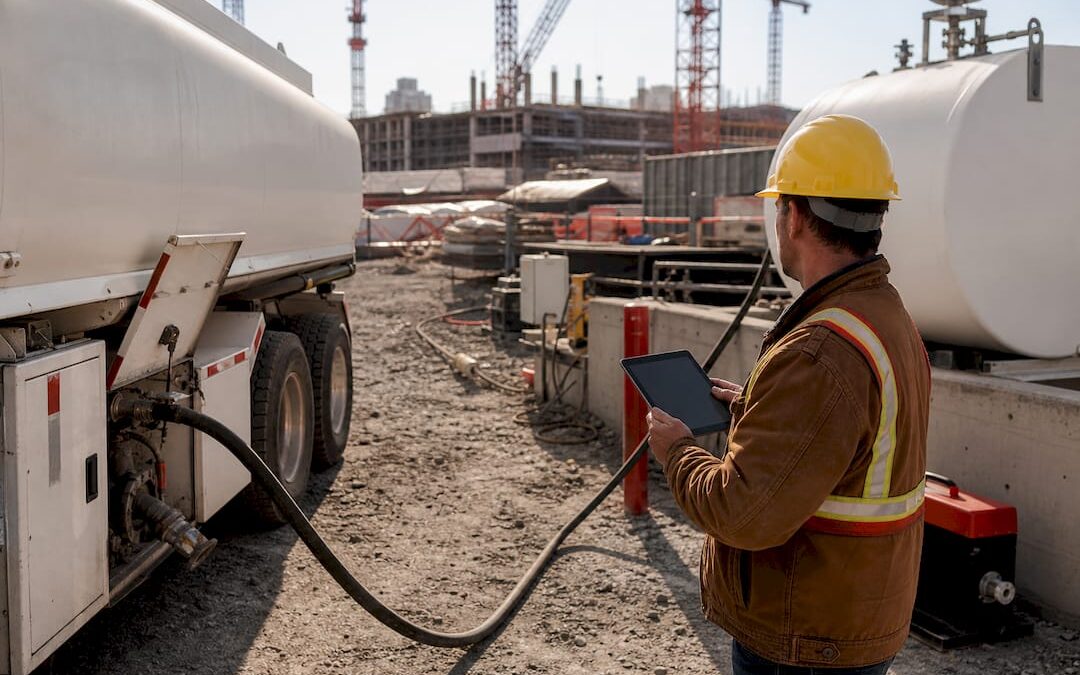
Construction fuel logistics management is the systematic process of coordinating fuel delivery, storage, transfer, and consumption tracking across active job sites to keep equipment running and costs under control. When managed well, it prevents the kind of quiet operational drag that turns a profitable project into a margin problem. Construction managers, logistics coordinators, and procurement officers who treat fuel as a tracked resource rather than a background expense gain a measurable edge. Tools like FleetRabbit and Control IMS, along with AI-driven monitoring systems, have made real-time fuel visibility achievable for sites of every scale.
How construction fuel logistics are managed: the core processes
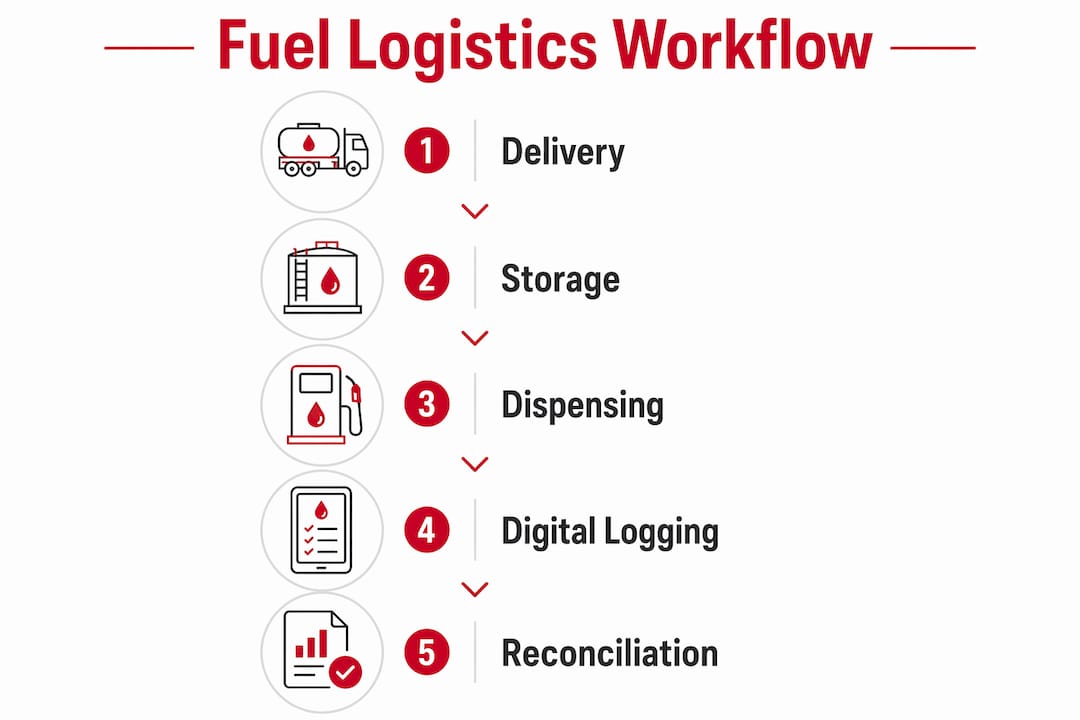
Managing fuel on a construction site follows a defined sequence. Each stage creates a handoff point where losses can either be caught or compounded.
-
Fuel delivery coordination. The process starts with scheduling deliveries from a supplier to match equipment demand. Delivery timing matters because running dry mid-shift stops excavators, dozers, and loaders cold. Procurement officers should align delivery schedules with project phases, not just calendar intervals.
-
Storage tank management. Fuel arrives into on-site storage tanks, which must be monitored for level, temperature, and integrity. Tank sensors connected to a central dashboard give site supervisors a live read on available volume. Without that visibility, teams often order emergency deliveries at premium rates.
-
On-site fueling workflows. Operators fuel equipment at designated points, and each transaction should require verification. That means logging the asset ID, operator name, fuel quantity dispensed, and time of fill. Fueling workflow discipline at this stage is where most sites either build or lose accountability.
-
Digital fuel logging. Every transaction feeds into a digital record. Manual paper logs create gaps. Digital systems capture data in real time and flag mismatches before they become write-offs.
-
Daily reconciliation. Closing the fuel log each day compares dispensed volume against tank drawdown. Discrepancies caught within 24 hours are recoverable. Discrepancies found at month-end are usually just losses.
Pro Tip: Set a hard rule that no equipment gets fueled without a logged asset ID. That single policy closes the most common gap in on-site fuel accountability.
How does technology improve construction fuel logistics management?

Technology does not replace operational discipline. It makes discipline easier to enforce and faster to audit.
AI-driven fuel management systems connect GPS data, telematics feeds, and tank-level sensors into a single dashboard. When a fuel transfer happens at a location that does not match a registered asset’s GPS position, the system flags it automatically. Integrated systems like FleetRabbit enable GPS-verified transactions and synchronize fuel logs, leading to immediate detection of siphoning and mismatches. That kind of automatic cross-referencing is impossible with manual tracking.
The benefits of a fully integrated system include:
- Real-time tank monitoring. Supervisors see current fuel levels from any device, eliminating the need for manual dip-stick checks.
- Automated anomaly detection. The system alerts managers when consumption rates spike beyond expected ranges for a given asset or shift.
- Idle-time tracking. Telematics data identifies which machines are running without productive output. This matters more than most managers realize.
- Digital audit trails. Every transaction is timestamped and tied to an operator, making compliance reporting and loss investigations straightforward.
- Mobile dashboards. Fleet managers and site supervisors can review fuel data from the field, not just from an office terminal.
AI-driven fuel management systems can reduce total project fuel costs by 15% to 25% within the first few months of deployment. That figure reflects the combined effect of catching theft, reducing idle waste, and tightening delivery scheduling. The ROI timeline for these systems is typically 60–90 days.
Managers who adopt a real-time audit mindset digitize every fuel transfer and catch anomalies within 24 hours rather than waiting for monthly reconciliations. That shift from reactive to proactive auditing is the single biggest behavioral change technology enables.
What are the biggest challenges in managing fuel logistics on construction sites?
Fuel loss on construction sites is rarely dramatic. It accumulates quietly through process failures, not headline theft events.
Construction projects experience fuel discrepancies of 3% to 6% when relying on manual tracking. Active operations often lose 8% to 15% of total fuel annually to combined waste, inefficient idling, and theft. On a large project burning thousands of gallons per month, that range represents a significant dollar figure that never shows up as a line item.
The most common sources of loss include:
- Machine idling. Equipment left running between tasks burns fuel with zero productive output. Most managers track total volume consumed but miss the idle-time component entirely.
- Manual tracking errors. Paper logs get lost, misread, or filled in after the fact. Those gaps make reconciliation unreliable.
- Unauthorized fueling. Without operator verification at the pump, fuel gets dispensed to personal vehicles, off-site equipment, or simply disappears.
- Poor delivery scheduling. Emergency deliveries cost more and signal a breakdown in planning. They also create pressure to accept whatever volume arrives, making over-delivery harder to catch.
Fuel loss is rarely a single event. It accumulates due to inefficient manual processes, with losses of 8%–15% more often attributed to operational waste than to outright theft. — FleetRabbit Construction Fleet Fuel Management Checklist
Manual processes without traceability consistently produce fuel discrepancies and unauthorized consumption. The fix is not stricter enforcement of manual systems. It is replacing manual systems with digital ones that enforce accountability automatically.
Idling deserves special attention. Most managers focus on total volume consumed, but automated idle detection can reduce fuel costs by 35% to 42% within 30 days. That figure consistently surprises site managers who assumed their biggest exposure was theft.
What fuel logistics strategies reduce costs and improve efficiency?
Effective fuel logistics strategies combine technology, supplier relationships, and operational policy. No single lever moves the needle as much as all three working together.
Digital logging and automated reconciliation
Replace paper fuel logs with a digital system that captures every transaction at the point of dispensing. Pair that with automated daily reconciliation so discrepancies surface within hours, not weeks. Job site fuel tracking gives managers the audit visibility needed to act on anomalies before they become patterns.
Idle-time reduction
Automated idle detection is the highest-return change most construction sites can make. Reducing idle time delivers fuel savings that exceed improvements from better delivery scheduling or storage management alone. Set idle-time thresholds by equipment type and review alerts daily during the first month to establish baseline behavior.
Bulk fuel storage
Bulk on-site storage reduces dependence on frequent deliveries and eliminates emergency delivery premiums. Bulk fuel delivery and storage paired with tank monitoring lets procurement officers schedule deliveries based on actual consumption data rather than guesswork.
Supplier partnerships with remote monitoring
Work with suppliers who offer remote tank monitoring as part of their service. That capability means your supplier can see your tank level and schedule a delivery before you run low, without a phone call from your site foreman.
| Strategy | Primary benefit | Implementation complexity |
|---|---|---|
| Digital fuel logging | Eliminates manual tracking errors | Low |
| Automated idle detection | Reduces idle waste by 35%–42% | Medium |
| Bulk on-site storage | Eliminates emergency delivery costs | Medium |
| GPS-verified transactions | Prevents unauthorized fueling | Medium |
| Supplier remote monitoring | Prevents run-dry events | Low |
Pro Tip: Train every equipment operator on the fuel logging process during site orientation, not after a discrepancy is found. Prevention costs far less than investigation.
Operational discipline combined with technology integration is the core of effective fuel logistics management. Negotiating a better fuel price matters, but operational discipline yields better savings than price negotiation alone. The sites that control fuel costs best are the ones that treat every gallon as a tracked asset from delivery to combustion.
Key takeaways
Effective construction fuel logistics management requires digital tracking, automated reconciliation, and supplier coordination working together to eliminate the 8%–15% annual fuel loss that manual processes routinely produce.
| Point | Details |
|---|---|
| Digital logging is non-negotiable | Manual paper logs create gaps that lead to 3%–6% unexplained fuel discrepancies on most sites. |
| Idle time is the hidden cost | Automated idle detection reduces fuel costs by 35%–42% within 30 days, outperforming most other savings measures. |
| Real-time auditing beats monthly reconciliation | Catching anomalies within 24 hours prevents losses from compounding into write-offs. |
| Bulk storage reduces emergency costs | On-site bulk tanks paired with remote monitoring eliminate premium-rate emergency deliveries. |
| Supplier partnerships extend your visibility | Suppliers with remote monitoring capability can schedule deliveries proactively, preventing run-dry downtime. |
How Anytimefuelpros supports construction fuel logistics
Construction sites that manage fuel well share one trait: they have a reliable supply partner who shows up on schedule and provides visibility into what was delivered.
Anytimefuelpros delivers bulk diesel directly to job sites across Texas, Utah, and nationwide through a trusted partner network. Construction managers working with Anytimefuelpros get scheduled deliveries timed to actual consumption, transparent invoicing with delivery confirmation, and 24/7 emergency response when a project cannot wait. The benefits of professional fuel delivery go beyond convenience. They include tighter cost control, fewer run-dry events, and a cleaner audit trail for every gallon that hits your tanks. For sites ready to move from reactive fueling to planned fuel logistics, on-site diesel delivery from Anytimefuelpros is a direct path to that outcome.
FAQ
What is fuel logistics for construction?
Fuel logistics for construction is the coordinated management of fuel delivery, on-site storage, equipment fueling, and consumption tracking across a job site. The goal is to keep equipment running without interruption while minimizing waste, theft, and unplanned costs.
How much fuel do construction sites typically lose to waste and theft?
Construction sites relying on manual tracking experience discrepancies of 3%–6%, while active operations often lose 8%–15% of total annual fuel to combined waste, idling, and theft. Digital tracking and automated reconciliation are the most effective tools for closing that gap.
What is the fastest way to reduce fuel costs on a construction site?
Automated idle detection delivers the fastest results, with fuel cost reductions of 35%–42% achievable within 30 days. Most sites underestimate how much fuel is burned by equipment running without productive output between tasks.
How often should fuel logs be reconciled on a job site?
Fuel logs should be reconciled daily. Catching discrepancies within 24 hours allows managers to investigate and correct issues before they become established patterns of loss.
What should I look for in a construction fuel delivery partner?
Look for a supplier who offers scheduled recurring deliveries, transparent invoicing, remote tank monitoring capability, and 24/7 emergency response. Those four features eliminate the most common causes of fuel-related project downtime.
Recommended
- Construction Site Fueling Workflow: Cut Downtime Fast
- Maximizing Efficiency: How On-Site Fuel Delivery and Fuel Tanks Can Boost Your Construction Project’s Productivity – Anytime Fuel Pros
- Bulk Fuel Delivery & Storage on Job Sites – Anytime Fuel Pros
- Fuel Delivery for Logistics Yards: 2026 Operations Guide
Recent Comments